Understanding Small “t” Trauma and Big “T” Trauma
Understanding Small “t” Trauma and Big “T” Trauma
- posted: Jan. 30, 2025
- ART Therapy, Brainspotting, Trauma, Childhood Trauma
Understanding Small “t” Trauma and Big “T” Trauma
When we think of trauma, we often imagine catastrophic events like war or natural disasters—what’s known as "Big T Trauma." But trauma also includes less obvious, everyday experiences called "Small T Trauma," which can significantly affect mental and emotional well-being. Recognizing these differences is key to understanding and validating diverse experiences of pain.
Big “T” Trauma
Big T Trauma involves events that threaten physical safety or life. These are acute, dramatic, and universally recognized as traumatic.
Examples:
- Violence or abuse
- Life-threatening accidents
- Natural disasters
- Serious illness or loss of a loved one
Impact:
Big T Trauma often leads to PTSD symptoms like flashbacks, hypervigilance, or emotional numbness, disrupting many areas of life.
Small “t” Trauma
Small t Trauma includes distressing events that overwhelm one’s ability to cope but don’t involve direct physical danger. These experiences are often subtle and cumulative.
Examples:
- Bullying or rejection
- Financial stress
- Emotional invalidation
- Frequent moves or instability
Impact:
Small t Trauma can lead to chronic anxiety, low self-esteem, or depression. Repeated exposure can mimic the effects of Big T Trauma.
Why It Matters
Trauma—big or small—is valid and deeply personal. Small T Trauma is often overlooked, leaving individuals feeling invalidated or comparing their pain to others. Recognizing that all trauma matters is essential for healing.
Healing from Trauma
Whether dealing with Big T or Small T Trauma, healing requires patience and support. Here are some steps to help:
- Acknowledge Your Experience: Validate your feelings without minimizing them.
- Seek Professional Help: Trauma-informed therapy, such as CBT or EMDR, can be transformative.
- Build a Support System: Lean on trusted people or join support groups.
- Practice Self-Care: Engage in mindfulness, exercise, or creative outlets.
- Be Patient: Healing isn’t linear. Celebrate progress, no matter how small.
Conclusion
Trauma—big or small—shapes how we view ourselves and the world. By understanding and validating all types of trauma, we create space for compassion and healing. Remember, your pain is real, and your journey to healing is valid.
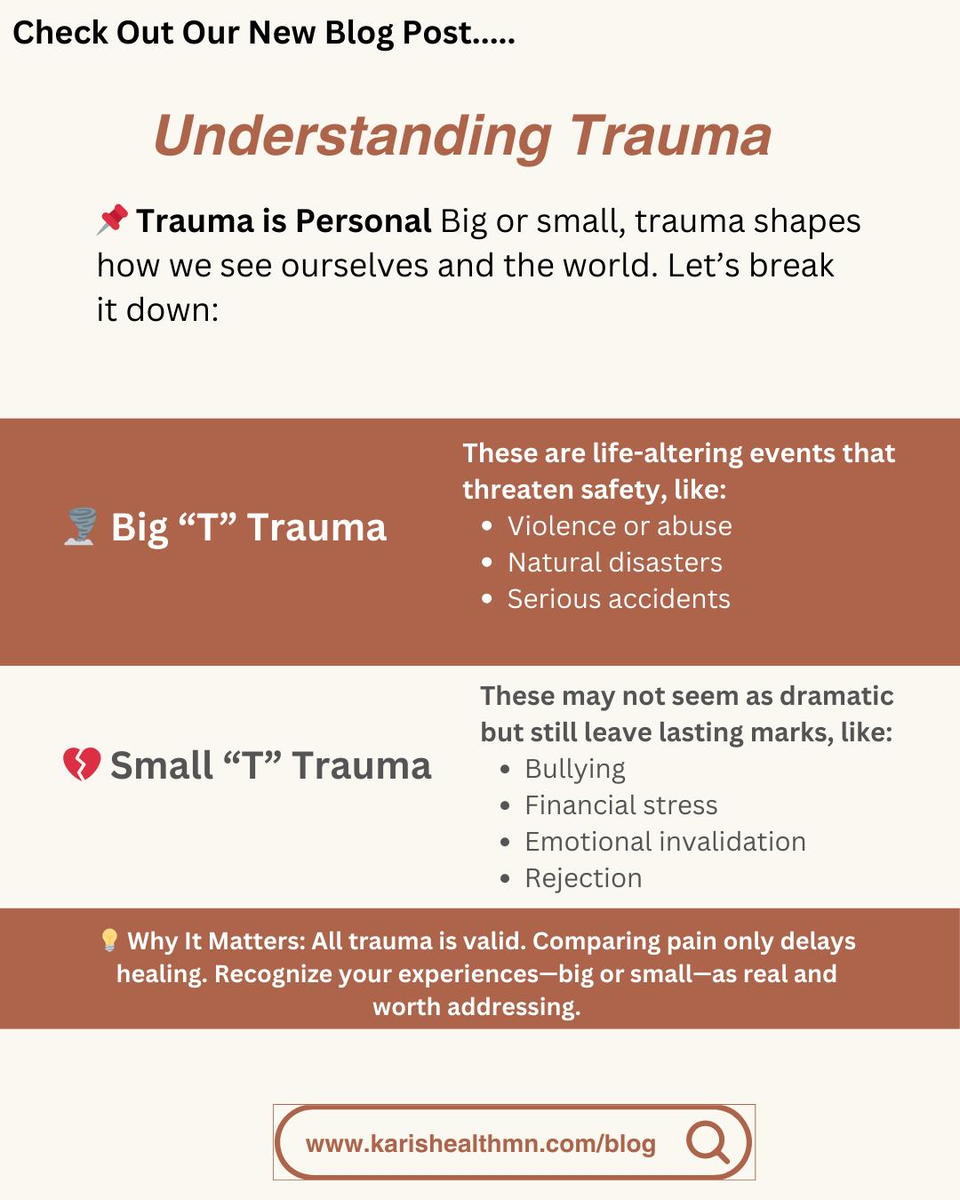

Trauma—big or small—shapes how we view ourselves and the world. By understanding and validating all types of trauma, we create space for compassion and healing. Remember, your pain is real, and your journey to healing is valid.
Disclaimer
The content provided on this blog by Karis Health & Wellness is for informational and educational purposes only and is not intended as a substitute for professional mental health treatment, diagnosis, or therapy.
Reading this blog does not create a therapist-client relationship with Karis Health & Wellness or any of its providers. If you are experiencing emotional distress, mental health concerns, or a crisis, we encourage you to seek support from a licensed mental health professional in your area.
If you are in immediate danger or need urgent support, please call 911 or contact a local crisis line or emergency service provider.
Karis Health & Wellness is committed to promoting mental wellness, but individual care and professional guidance are essential for effective treatment and support.
Peace and serenity are within reach. Let us help you find it.
-
Managing Stress & Anxiety
Anxiety and stress can feel very crippling, and we want you to live a life free from both.
-
Healing from Trauma
Trauma is painful but it can be overcome. Trust us to help you work through your painful past.
-
Mending Relationships
Find ways to reconnect with your partner, family, and friends—those you care about most.